Inside the book
A parable, twelve chapters in five parts, and an epilogue, with five appendices. Each part ends with review questions for readers, classes, and teams.
When a tool can build almost anything, the scarce and valuable capacity is the judgment that decides what is worth building, and why. This book is about that judgment: how it is exercised, how it is formed, and how we direct the most powerful instruments we have ever held toward work worth keeping.
The argument rests on two traditions that have never been introduced to one another: the old workshop of subtraction, and the tradition of situated learning and appreciative design. Both grew from close study of real work. Both ask how to spend a scarce resource well.
A parable to begin
The story comes first, so that you watch the argument happen to people before it is stated.
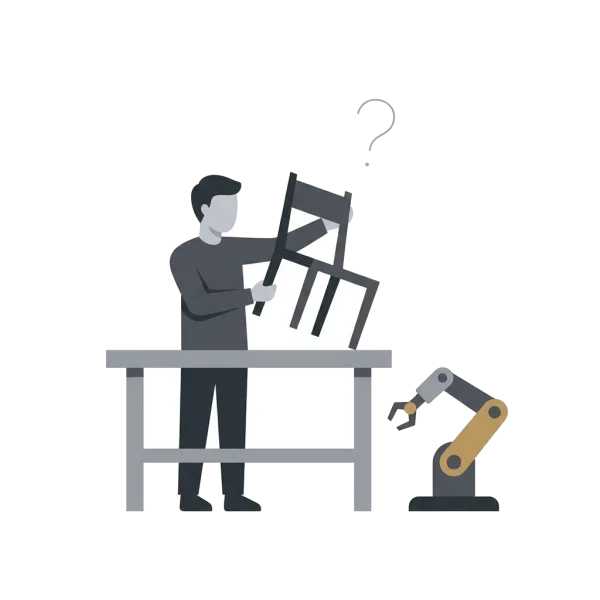
The machine turns again
How each turning in making changed the judgment work invites, and where the value moved.
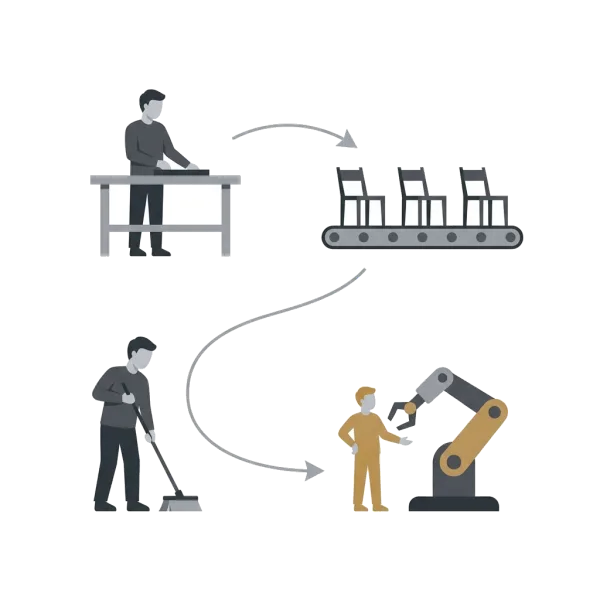
The Return of the Maker
Each turning in how we make has changed how much judgment the work invites.
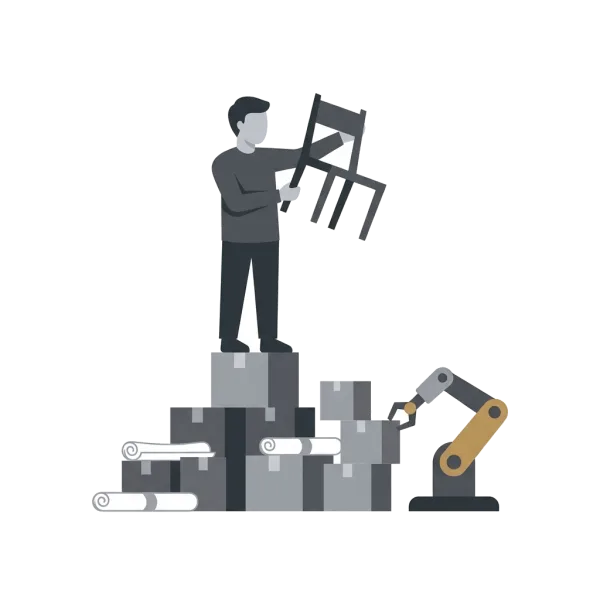
Where the Value Moved
When making is nearly free, deciding what is worth building is the scarce skill.
From the old workshop to the guild
What the old workshop gave, and the turn from waste to strength.
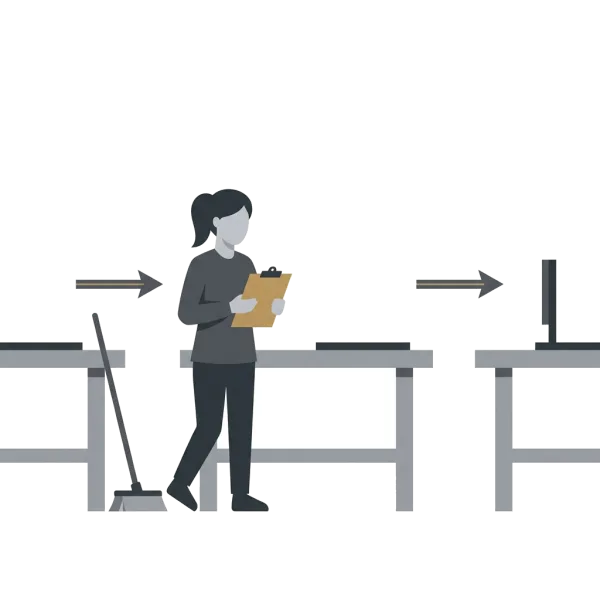
What the Old Workshop Gave Us
The old workshop’s disciplines were always about creating value.
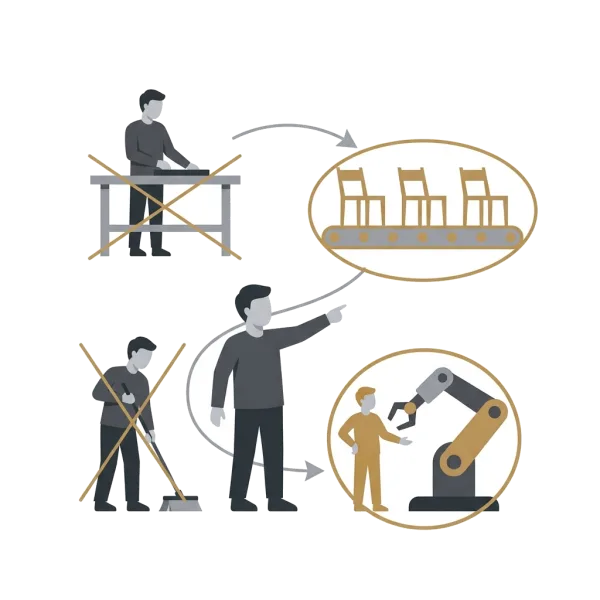
The Primitive Turns
Change the starting point from waste to strength, and the disciplines carry forward.

The Appreciative Turn
When making is abundant, the right first question is what is already strong.
Reuniting the tree
Two traditions, one root, and the tool inside the activity.

Two Branches, One Root
Two traditions grew from the same root: watching real people do real work.

The Activity, with the Tireless Tool Inside It
The tool enters as a new instrument and reorders the whole of the work.
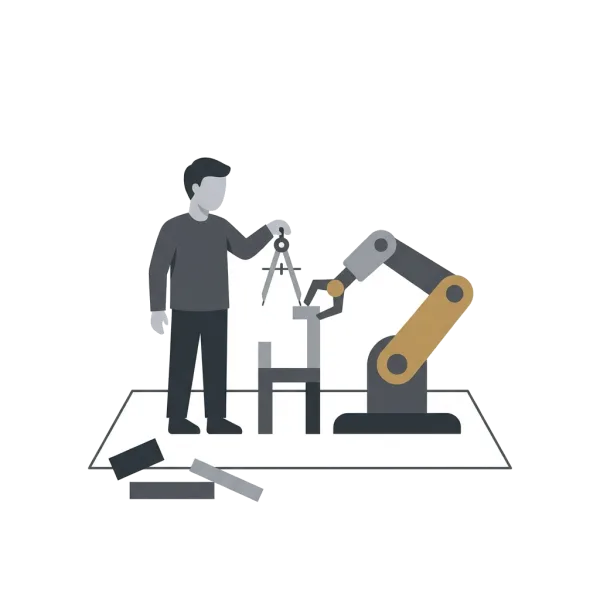
Directed Making
Amplification and judgment are partners. The guild’s boundaries make the work last.
The maker’s leverage
The six gifts the tool amplifies, and the quality disciplines that keep it trustworthy.

The Tool Amplifies, You Decide
Six gifts the tool amplifies, and the deciding that stays with the maker.
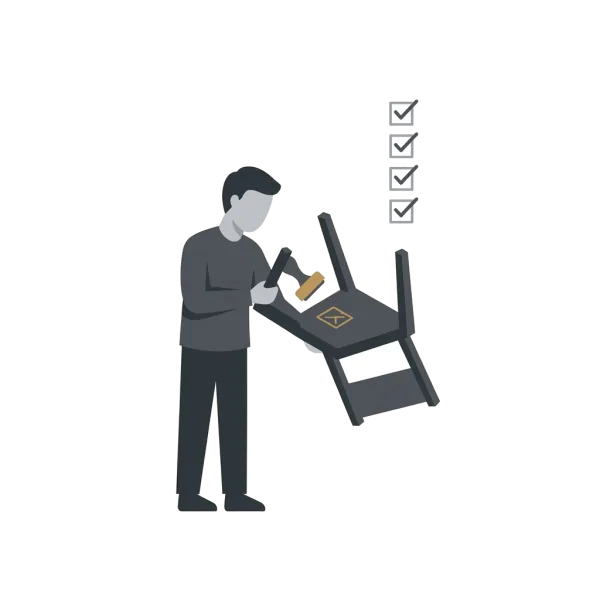
Building Quality In
Steered making, pull, grounding in the real, and quality built in.
Forming the maker
Practice fields at scale, and a pattern for building a guild hall of your own.
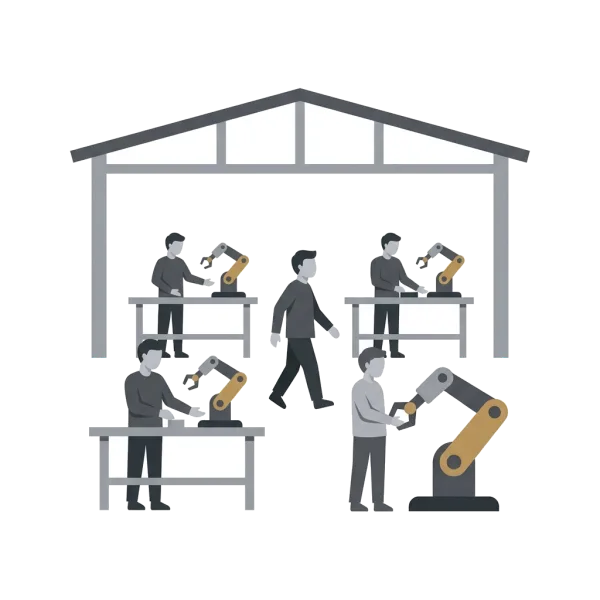
Practice Fields at Scale
Judgment is formed in practice, and the tool makes practice affordable.
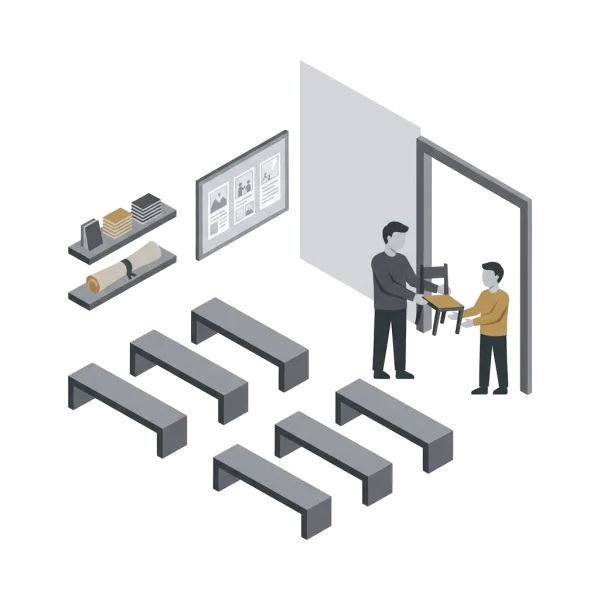
The Guild Hall
Generative Practice runs today as a working model you can build for yourself.
A question to end on
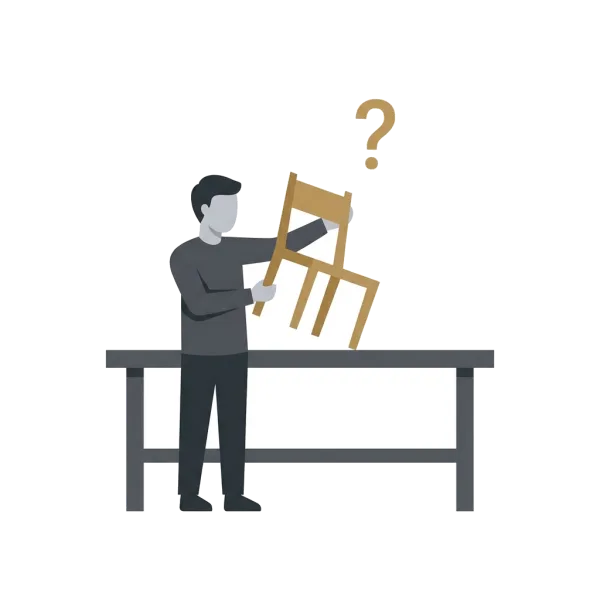
Who Is It For?
The question no tool can answer.
The back of the book is the working side of the practice. Most of it is kept on this site as well, where the field can be played and the prompt copied.
-
Appendix A
The Manifesto
A manifesto and lexicon for the age of the tireless tool.
-
Appendix B
The Cast
Four roles on your own team, so that the practice fields read as your own team and not a stranger’s.
-
Appendix C
The Behold Field
Five minutes, three steps: trade the deficit question for the appreciative one.
-
Appendix D
A Behold Prompt
A template for directing the tool through the Behold stage on a system you actually maintain.
-
Appendix E
The Doctrine
The foundations beneath the practice, each set beside its traditional counterpart.
-
Back matter
References
The works, people, and research cited in the book, and public-domain translations of Aquinas, Aristotle, and Plato.
In the book
Diagrams from the book. Each shows a process the chapter teaches.
- Craft the maker holds all the judgment
- Mass making the system holds the judgment
- The old workshop judgment returns to the worker
- The tireless tool the maker returns, at scale
- Behold what already holds
- Envision the governing vision
- Bound the marks and tolerances
- Make in small, marked increments
return to what is now strong
- A tool generates it
- It works and reads well
- PLAUSIBLE
- Who is it for?
- Is it worth keeping?
- Who answers for it?
- WORTHY
The Guild’s Charter
We, the makers of this guild, hold these commitments.
- 1 We begin from what holds. Each round starts by beholding what is already strong, and we build outward from it.
- 2 We name the vision first. No work is drawn until we have said what it must serve, in words precise enough to be confirmed or denied.
- 3 We keep the judgment. The tool may do the making. We decide what deserves to exist, and we answer for it.
- 4 We steer within boundaries. We set the standards and tolerances before the tool generates, and we return to beholding after every making.
- 5 We keep the old disciplines. We make for a real need, build quality in at the bench, and go and see the actual work.
- 6 We form makers in practice. Newcomers do real work at the edge of the guild, with a coach who shows, guides, steps back, and lets them stand.
- 7 We hold care and craft together. We do not make a thing only because it is easy, and when it fails we fix the guardrail, not the person.
Work that meets these bears the guild’s mark.
Published by Atelier Press. Illustrations by Gemini.